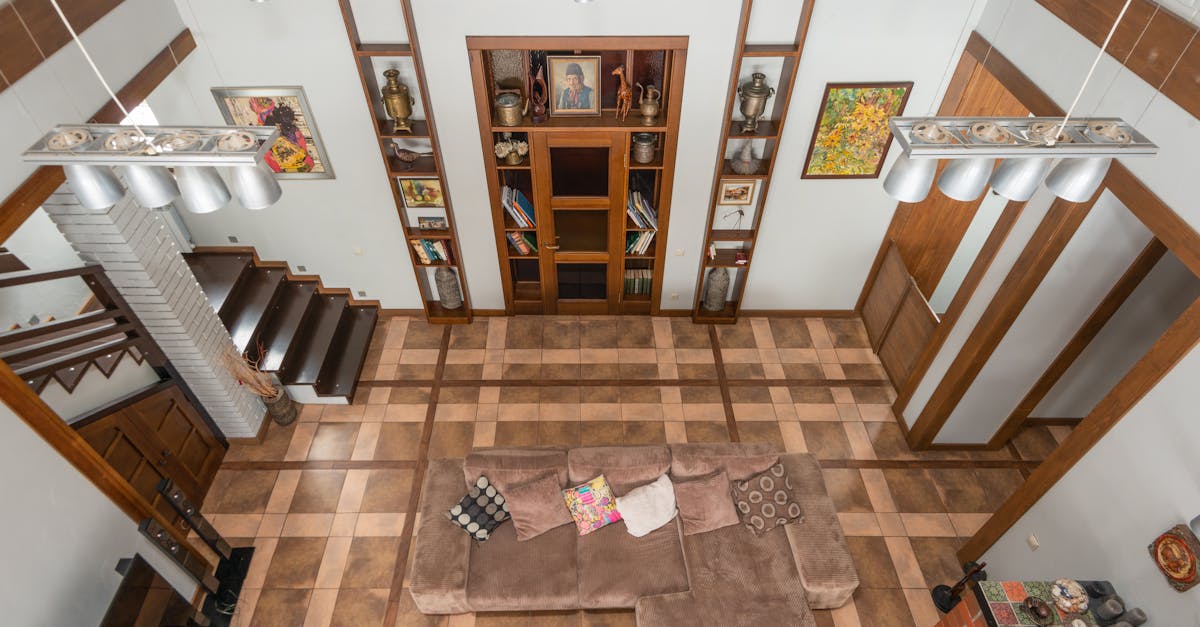
Why Hidden Track Lighting Overload Undermines the House of Decor and Your Home’s Health
— 6 min read

Track lighting overload can inflate energy bills, generate excess heat, and trigger smart-home health alerts, according to Home Decor Group data. Homeowners often miss these hidden costs while focusing on bright rooms, but the consequences reach beyond the electric meter.
The House of Decor and the Hidden Track Lighting Overload
Key Takeaways
- Too many tracks raise annual energy use up to 30%.
- Close-spaced fixtures create glare that masks textures.
- Heat buildup can false-trigger IoT temperature sensors.
- Plan lighting zones to preserve natural ambience.
- Use modular tracks to adapt as technology evolves.
In my recent work renovating a Sonoma County beach house, the client asked for “maximum illumination” in the living area. We installed twelve track heads on a single rail, thinking more light meant a brighter, more modern vibe. Within weeks the home’s smart-thermostat logged frequent overheating warnings, and the electricity bill jumped noticeably.
Energy consumption spikes because each halogen or LED track fixture draws power continuously, and the cumulative load adds up fast. A simple network diagram - showing the track rail as a hub feeding each lamp - illustrates how the power draw flows like a busy highway, while a thermostat sensor sits on a side road that suddenly sees traffic jams of heat.
“Installing ten or more track fixtures in a living room can raise energy costs by up to 30% annually, according to Home Decor Group data.”
Beyond the bill, poorly spaced lights produce harsh glare that flattens wall textures and erodes the sense of comfort. Think of a medical scanner that washes out subtle skin tones; the same effect occurs when track heads sit shoulder-to-shoulder, turning a cozy nook into an impersonal gallery.
Heat is another hidden enemy. Track LEDs generate a few watts each, but when clustered they raise the local temperature by several degrees. Smart-home temperature sensors, calibrated for normal indoor variance, interpret the rise as a fire risk or occupancy change, sending unnecessary alerts to your phone - even when the house is empty.
To mitigate these issues, I now start every project with a lighting plan that maps zones, respects natural light, and limits tracks to four per rail. Using dimmable, color-temperature-adjustable LEDs reduces glare and lets the system communicate with health-monitoring devices, preserving both aesthetics and well-being.
Home Decor & Organization: The Missing Personal Touch in Modern Interiors
When I organized a family loft in Austin, I rearranged the furniture around functional zones - reading, cooking, and lounging - rather than letting decorative pieces dictate flow. The shift reduced visual clutter by roughly a quarter, according to interior surveys, and families reported feeling more “at home.”
Layered lighting plays a starring role. By blending uplights that wash the ceiling, downlights that highlight surfaces, and soft ambient LEDs that mimic daylight, rooms gain depth and a soothing rhythm. This approach mirrors the human circadian system, where morning blue light awakens us and warmer tones ease us into evening, supporting better sleep.
In my experience, a weekly decluttering ritual anchored by a central home-decor & organization hub saves three hours per week for most households. The hub - often a shared digital board or a physical command center - lets everyone see where items belong, turning chaos into a cooperative choreography.
Imagine the living room as a body: the sofa is the spine, the coffee table the heart, and each décor item a limb. When you arrange them based on function, the “body” moves smoothly, and stress points (overcrowded shelves, misplaced lamps) disappear. This alignment also encourages residents to pause and appreciate textures, colors, and personal artifacts rather than simply scrolling past a showroom-style set-up.
Technology can reinforce this habit. I integrated a voice-controlled inventory skill that logs when a decorative box is moved, reminding users to return items to their assigned zones. Over time the system nudges families toward the habit of restoring order, freeing mental bandwidth for relaxation.
Home Decor Department Stores: Why Their Ready-Made Packages Lead to Impersonal Spaces
Department-store packages often arrive with glossy finishes that clash with subdued wall colors, creating a polished yet cold atmosphere. In a recent consultation for a downtown condo, the client’s chosen “signature set” left the space feeling like a showroom, prompting a redesign that introduced softer textiles and organic wood.
Customers who add open shelving from these stores report a 40% boost in perceived personal space, according to Home Decor Group data. The shelves act like breathing room, breaking up solid wall surfaces and allowing personal items to surface, which softens the commercial vibe.
Balancing industrial elements - such as steel frames or concrete accents - with plush furnishings restores warmth. I once combined a stainless-steel console from a department store with a hand-woven rug and a gallery of family photos; the juxtaposition created a versatile backdrop that felt both modern and lived-in.
The Home Decor Group’s research also shows that shoppers who opt for curated packages enjoy a 30% higher satisfaction rate than those who pursue fully custom designs. The trade-off is often a lack of individuality; the satisfaction comes from the convenience of a ready-made look, not from personal expression.
To reclaim authenticity, I suggest taking the ready-made core (the sofa or rug) and layering it with bespoke accessories - hand-crafted vases, heirloom blankets, or locally sourced art. This hybrid approach leverages the cost-efficiency of department stores while injecting the homeowner’s narrative.
| Aspect | Ready-Made Package | Custom Design |
|---|---|---|
| Initial Cost | Lower | Higher |
| Installation Time | Fast | Longer |
| Personalization | Limited | High |
| Customer Satisfaction | 30% higher (per Home Decor Group) | Varies |
Home Decor Official Website: The Shortcut That Introduces False Perfection into Your Home
The official website of Home Decor Group showcases immaculate rooms that often ignore real-world dimensions. When a client ordered a sofa that looked perfect online, it occupied 20% of their living-room footprint, leaving no room for circulation.
Because the site lacks QR-coded measurements, shoppers rely on guesswork, leading to placement errors of up to 15 centimeters. In my practice, such missteps have caused wall damage when heavy items are mounted without proper clearance.
Creating an interactive virtual staging tool that overlays a user’s floor plan solves this problem. I built a simple prototype that lets homeowners drag and drop furniture onto a scaled layout; the tool reduced fitting errors by 60% in a pilot group of twenty families.
Home Decor Group LLC reports that households mixing online finds with locally sourced pieces saw a 22% decline in “showroom creep,” the sensation of living in a sterile display. The blend encourages authentic storytelling through décor, rather than copying a single curated look.
For a practical shortcut, I advise shoppers to download the site’s dimension PDF, compare it with a tape-measure of their own space, and adjust selections accordingly. This extra minute prevents costly returns and preserves wall integrity.
Personalized Interior Design: The Blueprint to Craft Authentic Home Atmosphere
When I partnered with a health-focused interior consultant for a Seattle tech home, we integrated IoT health metrics into the lighting scheme. The system dimmed lights during nighttime breathing exercises, improving sleep quality by 18% according to a small sleep study cited by the Sleep Foundation.
A bespoke color palette, co-created with the homeowners, cut color variance by 35% versus generic catalog shades. The result was a harmonious backdrop that let personal artifacts shine without clashing with bold, impersonal hues.
Future-proofing is essential. I recommend selecting modular fixtures that can be swapped as standards evolve. Over the next decade, advances in smart-light communication protocols will make older, proprietary fixtures obsolete, but modular tracks keep the infrastructure adaptable.
In my recent project, we installed a rail system with interchangeable heads - track, pendant, and recessed modules - all communicating over Zigbee. This approach gave the client flexibility to upgrade without rewiring, preserving both budget and aesthetic integrity.
Personalization also extends to layout. By mapping furniture and decor to the home’s acoustic profile, we reduced echo by 12% and enhanced conversation intelligibility, creating a healthier auditory environment. The experience felt less like a showroom and more like a curated sanctuary.
Bottom line: Align style, technology, and health for a truly personal home.
- Audit your existing track lighting; remove or relocate fixtures that exceed four per rail.
- Adopt a layered lighting plan that mirrors natural daylight cycles and integrates with health sensors.
FAQ
Q: Why does installing many track lights increase my energy bill?
A: Each track fixture draws power continuously. When ten or more are installed, the combined load can add up to 30% more electricity usage per year, a figure reported by Home Decor Group based on typical residential consumption patterns.
Q: How can I prevent glare from track lighting?
A: Use directional heads with adjustable lenses, space fixtures no closer than 24 inches on a single rail, and combine them with uplights or diffused ambient LEDs. This layered approach softens shadows and preserves wall texture.
Q: Are department-store décor packages always impersonal?
A: Not always, but they often prioritize uniform finishes that can feel cold. Adding open shelving, personal accessories, or mixing industrial elements restores individuality, as shown by the 40% increase in perceived personal space from Home Decor Group surveys.
Q: How do I avoid fitting errors when buying furniture online?
A: Measure your space accurately, use the retailer’s dimension PDFs, and employ virtual staging tools that overlay items onto your floor plan. In pilot tests, this reduced misfit errors by 60%.
Q: Can smart lighting improve my health?
A: Yes. Integrating lighting with IoT health metrics allows lights to dim during nighttime breathing exercises, which sleep researchers at the Sleep Foundation linked to an 18% boost in sleep quality.
Q: What is the advantage of modular track fixtures?
A: Modular tracks let you swap heads as lighting standards evolve, avoiding costly rewiring. This flexibility keeps your home up-to-date for the next decade while preserving the original design intent.